.png)
Plasma (XPL) fell approximately 26.7% within 24 hours on April 3, following a nearly 30% surge in the previous week. The drop occurred amidst a spike in trading volume, reaching over 110% of its market capitalization, as significant capital was deployed and withdrawn within a short period on the Hyperliquid derivatives platform. On-chain data indicates that this volatility may be linked to coordinated activity among several large wallets, combined with a cascade of leveraged position liquidations.
Plasma (XPL) is a Layer 1 blockchain focused on stablecoin payments, supporting EVM and a sidechain design connected to Bitcoin.
What Just Happened?
XPL, with a market capitalization of approximately $120 million prior to the volatility, recorded a relatively steady uptrend from late March, with the price rising from around $0.09 to nearly $0.16 before reversing to the $0.114 zone within 24 hours.
XPL Price Chart (1H). Source: TradingView
Notably, this upward and downward momentum coincided with a sudden surge in trading volume, indicating an unusual level of activity compared to the token’s typical liquidity conditions.
The price structure exhibited a short-term pump accompanied by heavy volume, followed by a near-vertical dump—a pattern often observed when liquidity is rapidly withdrawn from the market. This model typically reflects a short-term imbalance between supply and demand, especially when order book liquidity is insufficient to absorb large-scale trades.
Signs of Coordinated Trading Activity
On-chain data indicate that capital flows related to XPL were not distributed, but were concentrated in a short timeframe with large volume. According to Arkham, seven accounts deposited a total of approximately $1.85 million into Hyperliquid and may have used leveraged long positions to drive up the price of XPL.
THEY MADE $3 MILLION MANIPULATING $XPL
7 accounts deposited a total of $1.85M to Hyperliquid to manipulate XPL.
They pushed the XPL price up with leverage longs, then they withdrew a total of $4.63M from their collateral balances at exactly the same time, making $2.78M. pic.twitter.com/bdfevNf824
— Arkham (@arkham) April 3, 2026
Subsequently, these accounts executed withdrawals valued between $390,000 and $890,000 within less than 5 minutes. The total outflows are approximately $4.63 million USDC, representing an estimated profit of about $2.78 million.
The fact that capital was deployed and withdrawn in distinct intervals suggests these trades may have been executed according to a deliberate strategy, where the use of leverage likely amplified short-term price fluctuations.
Key Drivers Behind the XPL Drop
Existing data show that the selling pressure during XPL’s decline did not originate from a single source but was a combination of multiple market participant groups, including large-scale trading wallets, liquidated leveraged positions, and late-entry capital.
A group of large-scale wallets, which deposited a total of approximately $1.85 million, likely acted as the primary sell-side pressure during the price reversal phase after deploying and quickly taking profits.
According to expert analysis, this strategy may have involved establishing large-scale long positions using the TWAP method, with a total notional value of up to approximately $10.6 million at around 8x leverage. After withdrawing a portion of the profits, the remaining positions were left on the exchange.
over a month of HLP pnl wiped out by a few linked addresses trading $XPL today
process was:
– deposit ~$1.3m across 5 wallets
– twap long 93m XPL (~$10.6m, ~8x leverage)
– withdraw ~$3.1m total (allowed bc hyperliquid lets you withdraw uPnL as long as you stay above maintenance… pic.twitter.com/6Y5B6AVXlh— bheau (@bh359) April 2, 2026
Data from Hyperliquid recorded multiple backstop liquidation events at the same time, with a portion of the positions sold directly into the order book while the remainder was processed through the backstop mechanism. According to community estimates, this process resulted in a loss of approximately $400,000 for the Hyperliquid Liquidity Provider (HLP) because the wallet group fell into bad debt following liquidation.
Simultaneously, leveraged positions in the market were liquidated en masse as the price dropped, creating a liquidation cascade and accelerating the decline. Meanwhile, those who bought in during the earlier price surge may have become the liquidity source for sell orders, particularly given XPL’s limited liquidity.
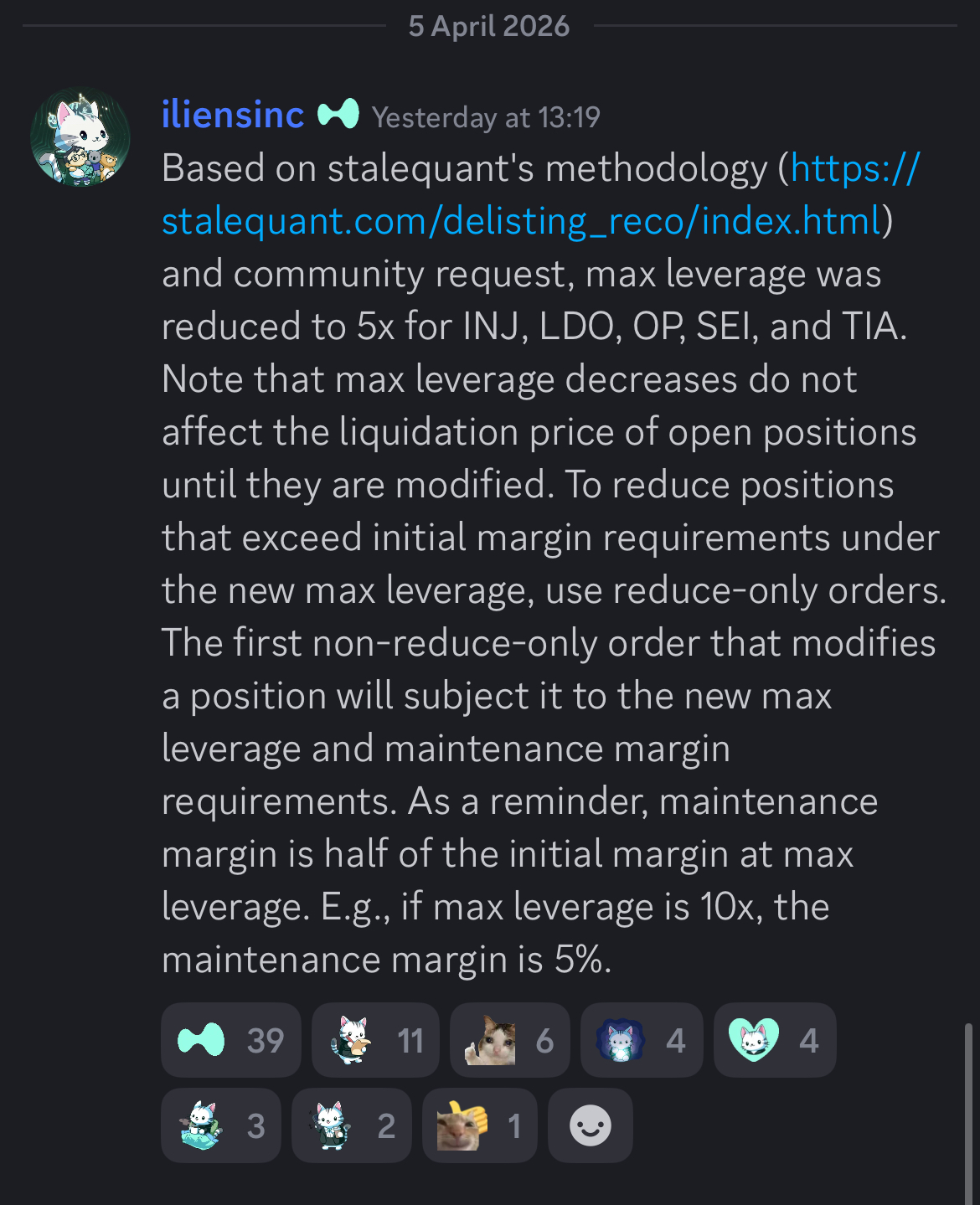
Announcement from iliensinc in Discord. Source: Hyperliquid
Following the incident, Hyperliquid strengthened risk controls, reducing the maximum leverage for certain tokens to mitigate similar risks in the future, according to a Discord announcement by Iliensinc, co-founder and CTO of Hyperliquid Labs.
Conclusion
XPL’s 26.7% drop in less than 24 hours, following a nearly 30% gain, reflects the high sensitivity of mid-cap altcoins to rapid changes in capital flows and leveraged position structures. The combination of concentrated capital, leverage liquidation cascades, and the clustered deployment and withdrawal of funds by large wallets created intense short-term volatility. Concurrently, Hyperliquid has enhanced risk management by reducing maximum leverage for several tokens to prevent similar risks in the future.
The post Plasma (XPL) Plunges 26.7% in 24 Hours: On-Chain Data Reveals Who Was Selling and Why appeared first on NFT Evening.
Read MoreBy: NFTevening
Title: Plasma (XPL) Plunges 26.7% in 24 Hours: On-Chain Data Reveals Who Was Selling and Why
Sourced From: nftevening.com/plasma-xpl-price-plunge-on-chain-data-analysis/?utm_source=rss&utm_medium=rss&utm_campaign=plasma-xpl-price-plunge-on-chain-data-analysis
Published Date: Mon, 06 Apr 2026 03:59:01 +0000
----------------------------
Did you miss our previous article...
https://trendingincrypto.com/nft-news/solana-defi-in-crisis-after-285m-hack-can-the-ecosystem-recover