.png)
Silver prices skyrocketed past the $77 per ounce (oz) mark in the early hours of April 8, following a statement from Donald J. Trump on Truth Social announcing that the United States (US) and Iran had reached a temporary ceasefire agreement. This development triggered a sharp decline in the U.S. Dollar Index (DXY) and sparked a “relief rally” across precious metals markets. However, the gains quickly reversed later that day as tensions flared up again at the Strait of Hormuz, pulling silver back toward the $75/oz range.
What Drove the Initial Rally
The surge in silver prices was directly influenced by reports of the temporary US-Iran ceasefire, including signals that shipping activities through the Strait of Hormuz could remain stable. This development immediately bolstered market sentiment, leading to an instantaneous reaction across various related asset classes.
Dollar Weakness
The primary driver behind silver’s rally was the weakening of the USD. The greenback fell sharply following the news, with the DXY dropping from above 100 to below 99, hitting approximately 98.6–98.9 during the session—a decline of over 1% in a short period.
DXY Chart (1H). Source: TradingView
This slump reflected a “risk-on” sentiment as investors reduced their USD holdings following the ceasefire news. In this context, silver—which is priced in USD—benefited directly from the currency’s weakness, fueling the metal’s sharp price increase.
Oil Decline
In tandem, the energy market recorded a steep drop following the news. WTI oil prices plunged from above $110 to near $94–$95 per barrel, representing a decline of more than 10–12% within a short timeframe.
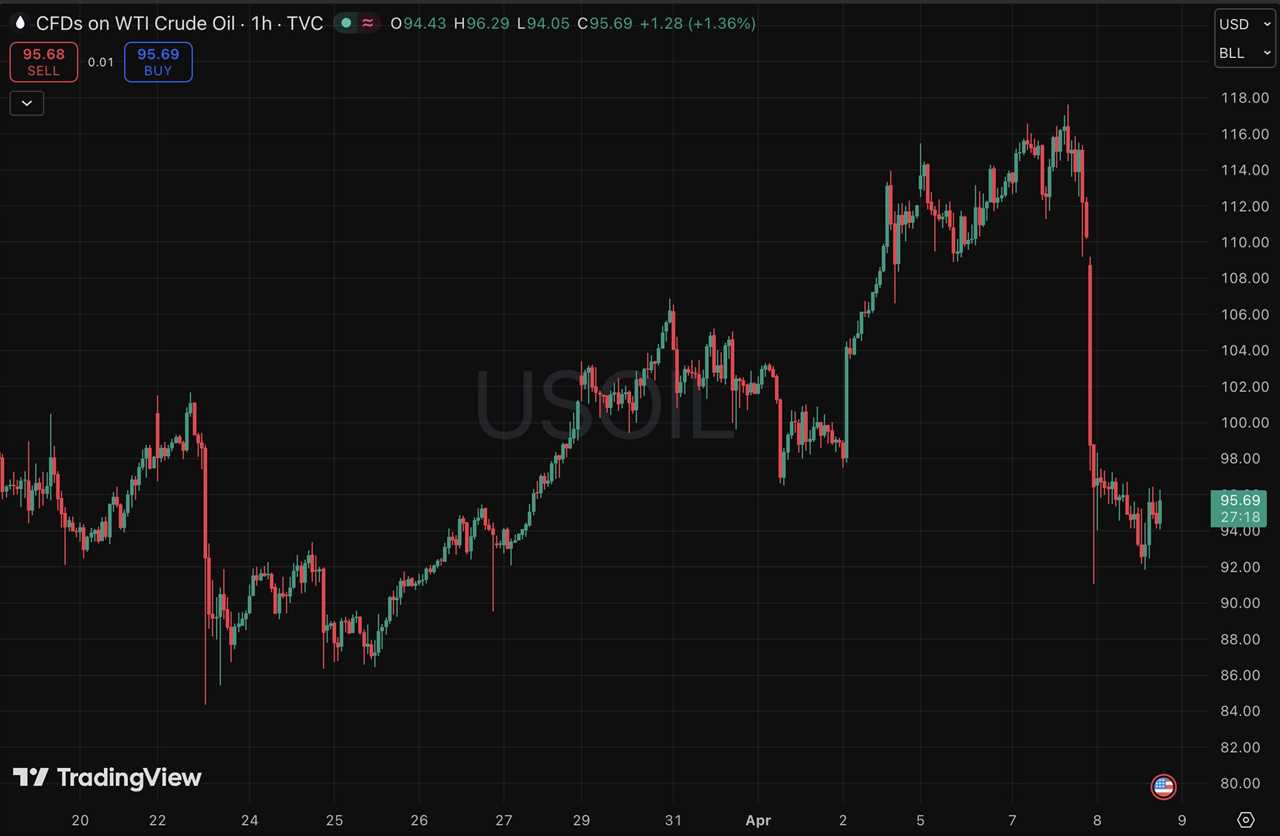
Oil Chart (1H). Source: TradingView
This downward trend significantly eased inflation concerns, putting further pressure on the USD. As inflationary pressures cooled, the demand for the USD as a hedge also diminished, indirectly supporting silver prices.
Rate Expectations
Additionally, the market began adjusting policy expectations for the Federal Reserve (Fed). The sharp drop in oil prices reduced inflationary pressure, reinforcing the possibility that the Fed would maintain a less “hawkish” stance—becoming less inclined toward aggressive rate hikes or potentially shifting toward policy easing sooner. While no official announcement has been made, expectations of stable or lower interest rates continued to drag the USD down, supporting silver’s initial upward momentum.
The combination of these factors pushed silver prices sharply above $77/oz, signaling a flow of capital back into the precious metals sector. Gold also recorded slight gains during the same period, confirming the broader market trend.
Rally Reverses as Hormuz Tensions Reignite
However, silver’s rally was short-lived. After peaking around $77.7/oz, prices quickly reversed, falling to approximately $75.3/oz later that day, a drop of over 3%.
The primary cause was renewed tension at the Strait of Hormuz, where Iran was reportedly restricting shipping through the route amid resurfacing geopolitical risks. This is one of the world’s most critical “choke points,” handling about 20% of global oil traffic.
This news caused oil prices to bounce back from the ~$94 lows to near $96 per barrel, reversing part of the earlier decline. Simultaneously, market sentiment shifted rapidly to a cautious stance, causing risky assets and metals such as silver to face profit-taking pressure.
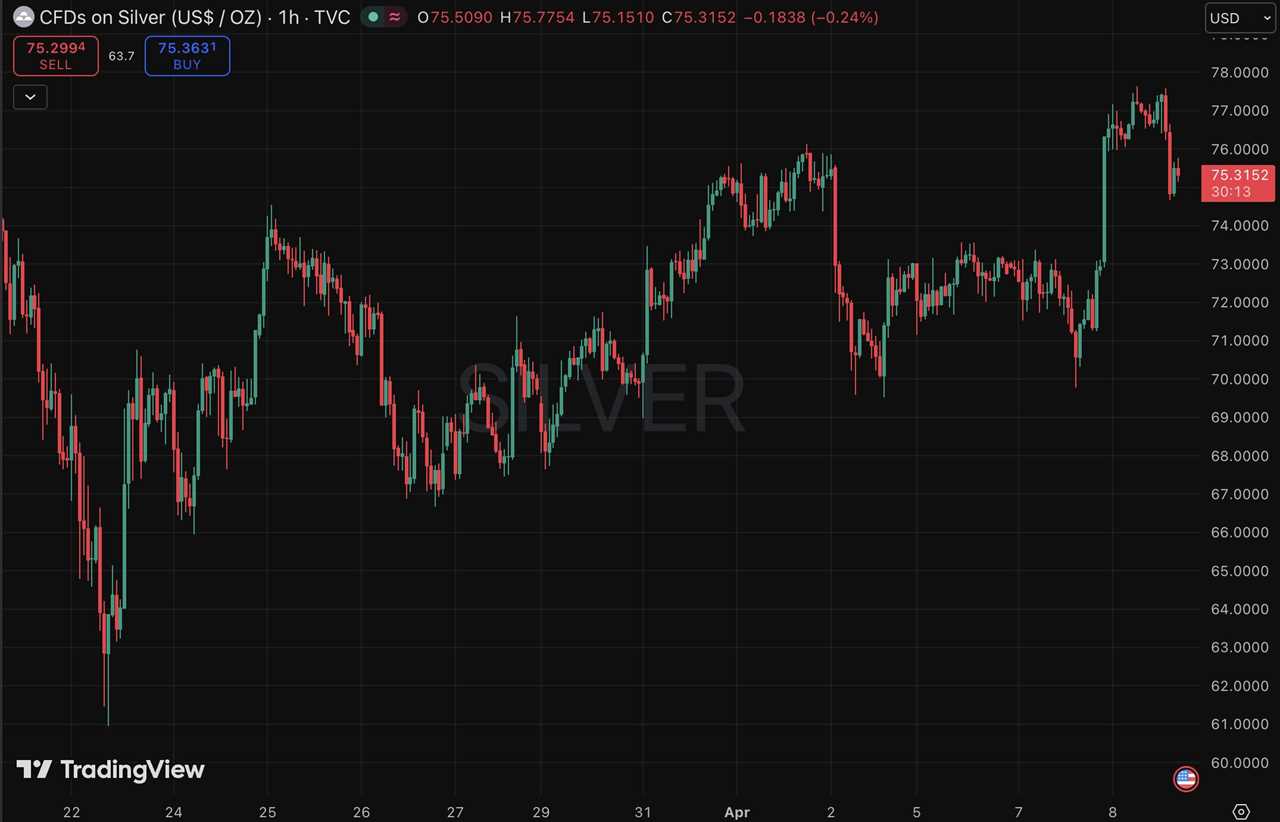
Silver Chart (1H). Source: TradingView
This sequence of events once again demonstrates the high sensitivity of the market: shifting from positive expectations following the ceasefire to a state of instability within just a few hours as geopolitical news remains unpredictable.
Insight
The price fluctuations immediately following the news show that the market is currently heavily focused on geopolitical factors, such as those related to the conflict in the Middle East. Silver’s initial rise to over $77/oz reflected expectations for a more stable market, but the swift reversal suggests this rally was “fragile.”
Silver is currently caught between two opposing forces: a weakening USD and easing inflationary pressure on one side, and unresolved geopolitical risks on the other.
Market Outlook
In the short term, silver is likely to remain dependent on the direction of the DXY as well as the stability of the energy market. Geopolitical factors, particularly concerning the Strait of Hormuz, will continue to play a pivotal role in shaping market sentiment. Any signs of escalation or de-escalation could quickly impact oil prices, thereby indirectly affecting precious metals markets like silver.
Silver prices are likely to continue fluctuating sharply in response to news headlines rather than forming a clear trend in the short term.
The post Silver Price Rally Soars Above $77 as US–Iran Ceasefire Sends Dollar Plunging appeared first on NFT Evening.
Read MoreBy: NFTevening
Title: Silver Price Rally Soars Above $77 as US–Iran Ceasefire Sends Dollar Plunging
Sourced From: nftevening.com/silver-price-volatility-us-iran-geopolitics/?utm_source=rss&utm_medium=rss&utm_campaign=silver-price-volatility-us-iran-geopolitics
Published Date: Thu, 09 Apr 2026 04:01:39 +0000
----------------------------
Did you miss our previous article...
https://trendingincrypto.com/nft-news/best-otc-trading-platforms-in-2026-key-features-pros-and-cons