.png)
An ETF that could place Pudgy PenguinsNFTs inside a regulated investment product in the U.S. is testing the boundaries of traditional finance, as illiquid assets are introduced into a capital structure designed for continuous trading.
The proposal, filed by Canary Capital with the U.S. Securities and Exchange Commission (SEC) in March 2025, marks one of the first attempts to incorporate NFTs directly into an ETF product. As of now, the SEC has not granted approval, and no specific listing date has been set. This proposal not only reflects growing institutional interest in NFTs but also highlights the challenges of fitting illiquid assets like NFTs into traditional ETF structures.
The proposal: putting NFTs inside an ETF
According to the Form S-1 registration statement filed with the SEC, the product named Canary PENGU ETF (the “Trust”) is designed as an exchange-traded fund with the objective of capital growth. Notably, the fund does not only include PENGU tokens — the official token of the Pudgy Penguins ecosystem — but also directly holds NFTs from this collection.
Form S-1: Registration Statement. Source: SEC
Additionally, the fund may hold other digital assets such as Solana (SOL) and Ethereum (ETH), primarily for trading, custody, and portfolio operations. This makes the PENGU ETF a rare “hybrid” model, combining high-liquidity tokens with culturally collectible NFTs.
While previous spot crypto ETFs paved the way for institutional capital to flow into crypto, the possibility of an ETF holding NFTs directly marks a breakthrough in bringing digital asset products into the traditional financial system.
This novelty also raises a question: if ETFs are designed to provide high liquidity and transparent pricing, is it feasible to include NFTs — which do not meet either of these criteria — in an ETF?
A product is still waiting for approval
Despite being filed in March 2025, the PENGU ETF remains under review and has not yet been authorized for public sale. According to SEC regulations, the product can only be launched once the registration statement becomes effective following approval.
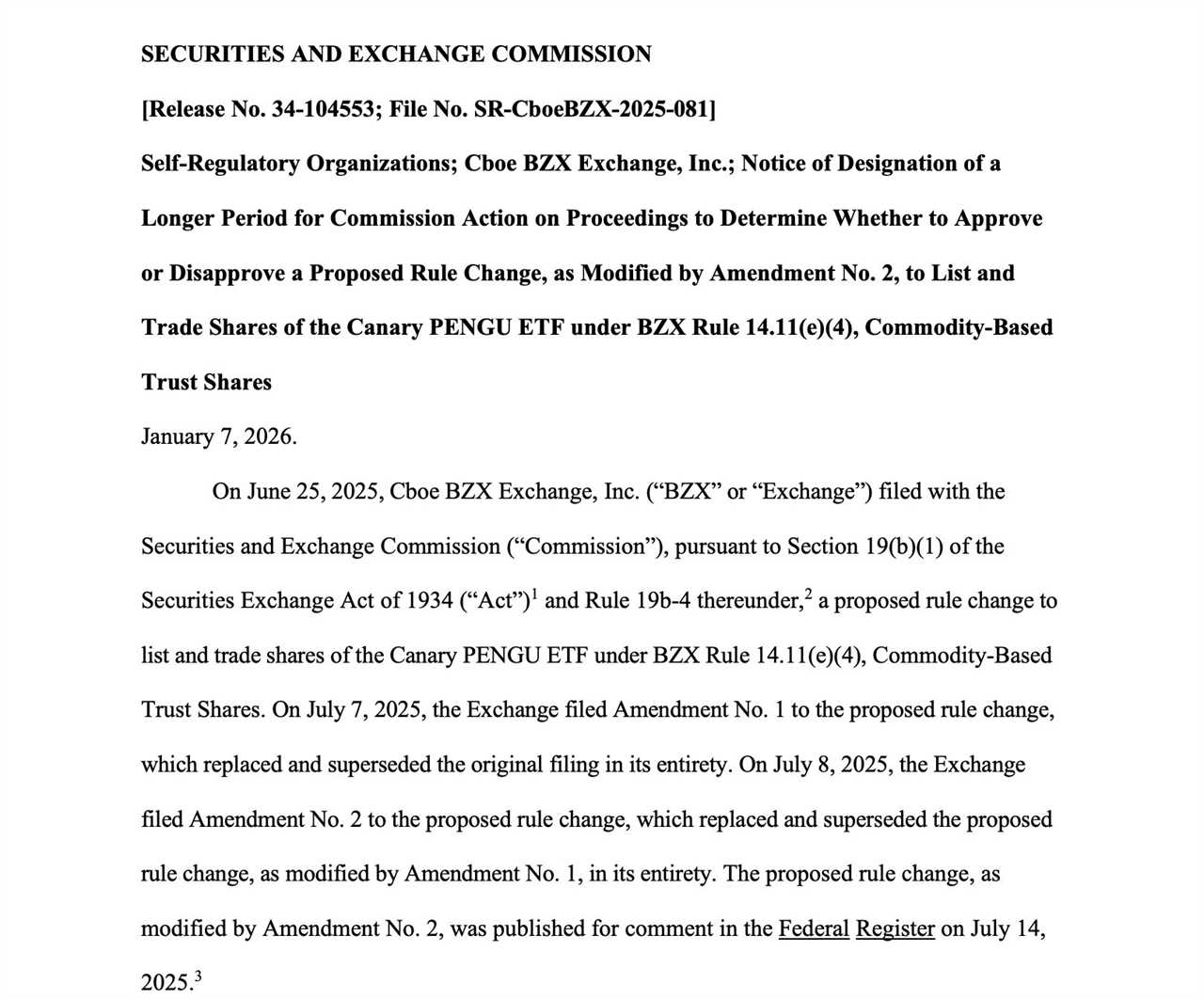
SEC notice of delay Pengu ETFs. Source: SEC
This process has undergone several delays in accordance with standard review procedures. In a recent notice, the SEC extended the decision-making period by an additional 60 days, having designated March 11, 2026, as the final deadline to approve or disapprove the proposal to list the PENGU ETF.
Alongside the S-1 filing, the listing process has made further progress as the Cboe BZX exchange filed Form 19b-4 with the SEC in June 2025 to propose rule changes for listing and trading the PENGU ETF. This move places the product into the official review process at the exchange level — a necessary step before an ETF can be publicly listed.
Unlike Bitcoin, an asset with high liquidity and transparent price data, NFTs lack unified valuation standards. This could make the evaluation process more complex and contribute to a longer approval timeframe compared to previous crypto ETFs.
Why NFTs complicate the ETF model
The core of an ETF is its ability to reflect the value of underlying assets transparently and continuously through Net Asset Value (NAV). However, when NFTs are included in an ETF structure, this mechanism begins to encounter issues in three main areas:
- Inconsistent Valuation: NFTs often rely on “floor prices” or discrete transactions with highly volatile prices, making the determination of the collection’s true value imprecise.
- Limited Liquidity: ETFs require an efficient creation/redemption mechanism for fund units, whereas NFTs can take time to sell and do not guarantee expected prices. This can easily lead to premiums or discounts between the ETF price and NAV.
- Complex Custody: NFTs require dedicated storage and security infrastructure (wallets, private keys), which differs significantly from traditional assets and is not yet fully standardized at the institutional level. While crypto custodians exist, expanding into NFTs remains an evolving field.
These factors make the PENGU ETF not merely a variation of a crypto ETF, but an experiment in whether NFTs can fit within the current financial framework.
What it means for Pudgy Penguins
If the PENGU ETF is approved, it would not only open a new access channel for investors but could also change how the market perceives the NFT narrative in general and Pudgy Penguins in particular. From an NFT collection, the project could become a “financial asset” traded on traditional financial markets.
This could help increase brand recognition and attract new capital inflows, especially from traditional investors who do not directly participate in the NFT market. Simultaneously, it sets a precedent for other collections, opening the possibility for similar ETFs in the future.
However, this also comes with risks. When a cultural asset is brought into a financial framework, it becomes subject to pressure from profit expectations and market volatility — factors that could alter its original nature.
“ETF-ization” could become a strong driver for the NFT market to regain capital, especially if standardized products help improve transparency and accessibility. This could pave the way for a new growth cycle where major collections are positioned as an alternative asset class.
Conversely, this process could also lead to the market becoming more “standardized” and structurally tightened. These standards might result in only a few projects qualifying, narrowing the NFT market.
What this means for NFT financialization
The fact that the PENGU ETF is designed to hold NFTs directly shows that this asset class is gradually moving closer to the traditional financial system, although hurdles remain. The delays in the review process reflect not only the SEC’s caution but also unresolved issues regarding how to value and operate this asset type within an ETF structure.
While the narrative of bringing NFTs to Wall Street is gaining attention, reality shows that integrating them into regulated financial products may be far more complex than expected.
The post A PENGU ETF Would Put Pudgy Penguins NFTs Inside a Regulated US Fund — What That Actually Means appeared first on NFT Evening.
Read MoreBy: NFTevening
Title: A PENGU ETF Would Put Pudgy Penguins NFTs Inside a Regulated US Fund — What That Actually Means
Sourced From: nftevening.com/pengu-etf-pudgy-penguins-nfts-regulated-fund/?utm_source=rss&utm_medium=rss&utm_campaign=pengu-etf-pudgy-penguins-nfts-regulated-fund
Published Date: Sun, 29 Mar 2026 04:16:51 +0000
----------------------------
Did you miss our previous article...
https://trendingincrypto.com/nft-news/blockdag-price-today-bdag-price-chart-and-performance